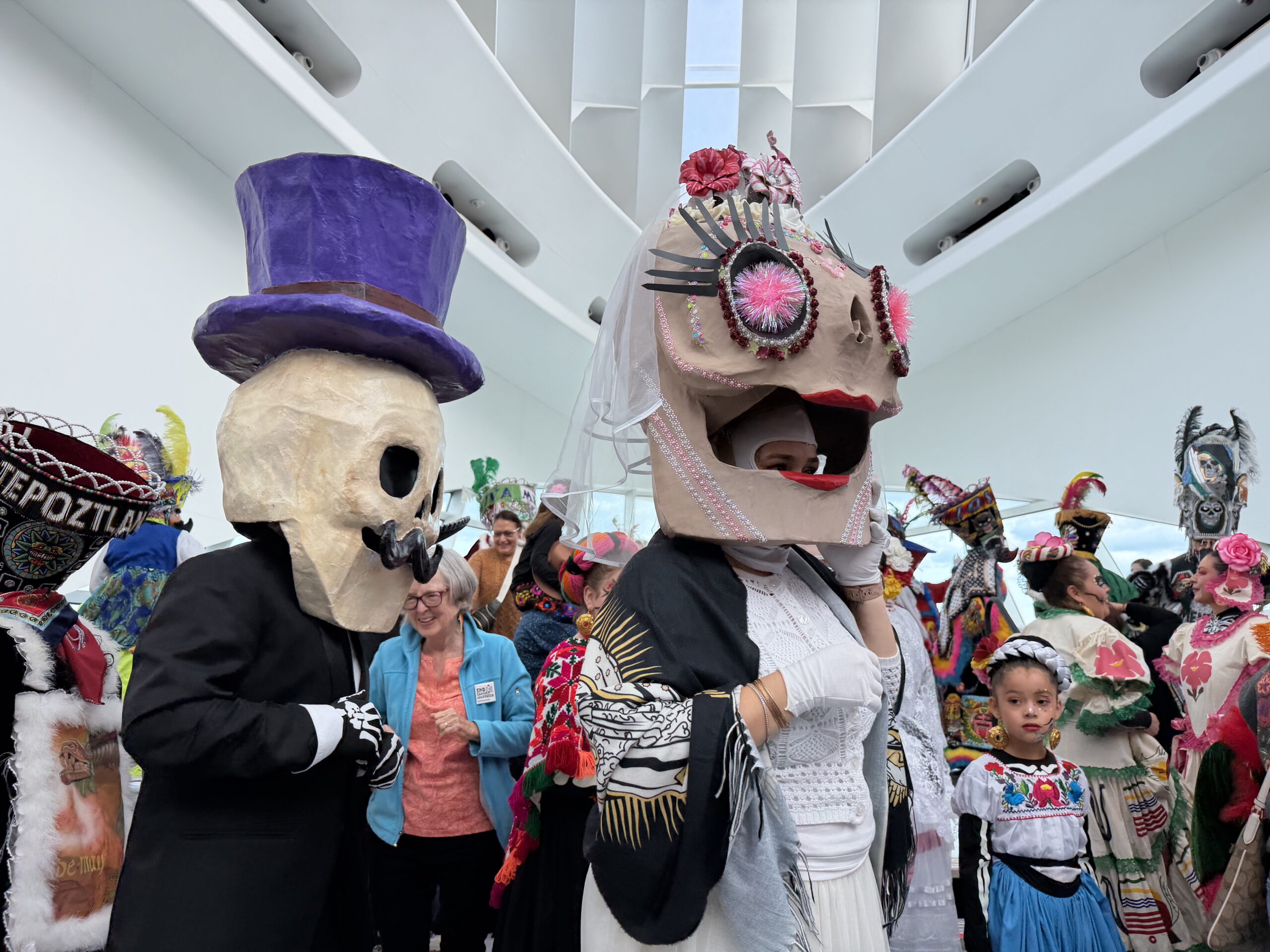
From crafting intricate paper figures to kickstarting community traditions, Gabriela Jiménez Marván is a master at building beauty from humble beginnings.
Growing up in Morelos, Mexico, Marván saw spectacular paper figures constructed by master artisans called cartoneros, especially at festivities like Día de Muertos. Cartonería was more than an artform; it was a bedrock of culture and collective memory. But it was also at risk.
“Cartonería was disappearing because not all of the generations wanted to continue,” says the 2025 Midwest Culture Bearer awardee based in Viroqua, Wisconsin.
In 2016, she began apprenticing with a third-generation cartonera. She learned not just the trade, but the stories and names behind it. She studied at the folk art museum in Morelos (Museo Morelense de Arte Popular), and later with Leonardo Linares, whose family are perhaps the most well-known and influential cartoneros in the world.
To pass on this knowledge, Marván founded a collective of women cartoneras in her hometown in south-central Mexico. They taught workshops for children and seniors, sometimes in partnership with environmental biologists. “Cartonería is about reusing paper, so we wanted to connect that with environmental education,” she says.
Collective Art Making
With recycled paper and homemade glue—cut, layered, pasted, dried, and painted—cartoneros create figures of people, animals, or fantastical creatures called alebrijes (invented by Pedro Linares in the 1930s).
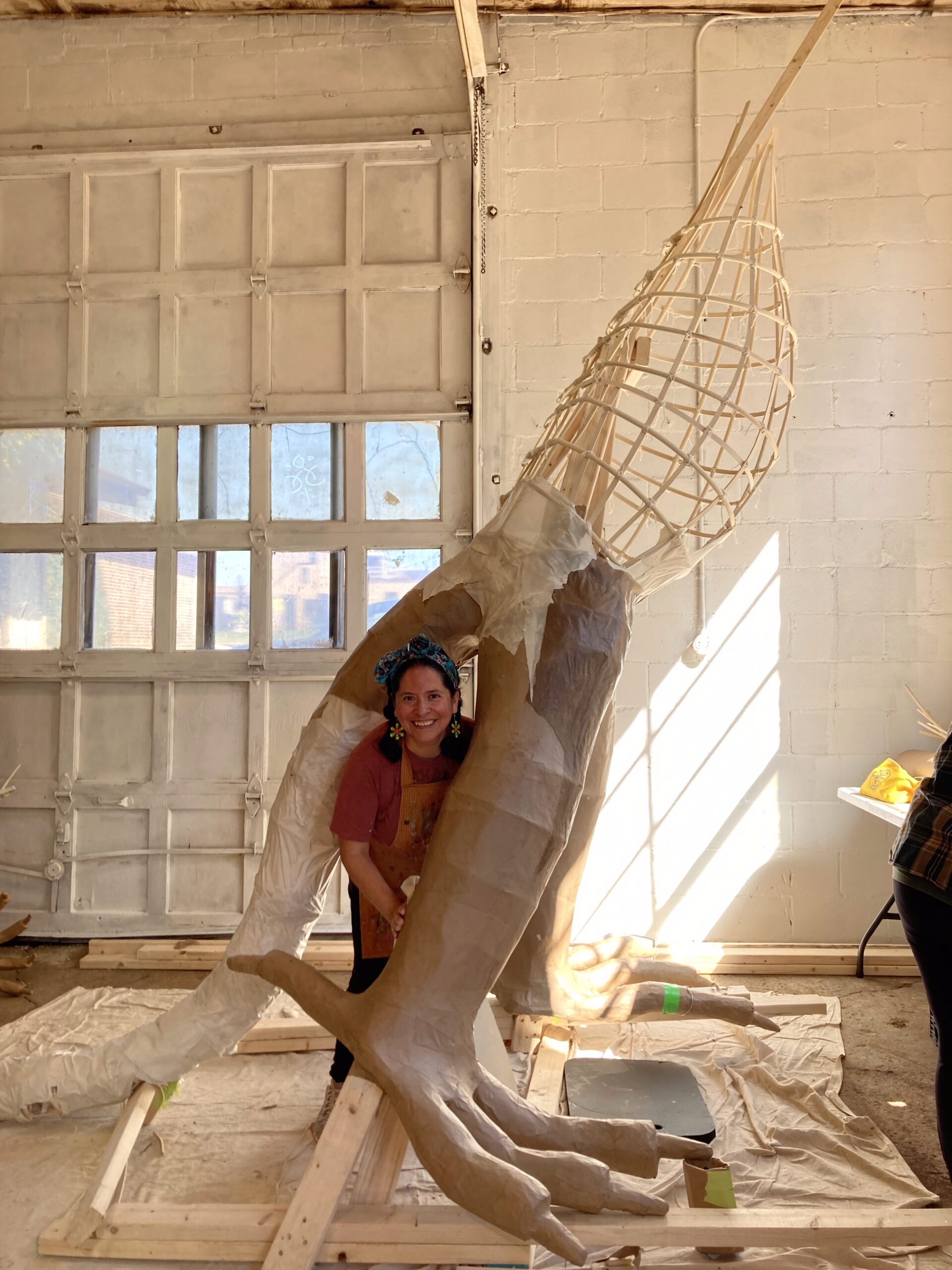
Large-scale cartonería pieces require a skeleton of wood or metal. Most times, it is not a solo activity.
“Community building is the heart of cartonería, the heart of my life,” Marván says. “In Mexico, cartonería has always been a collective practice. Big figures are created by teams of artists and families. They are meant to be on the streets in the hands of the community. Working this way teaches you to collaborate and honor many voices.”
So, after moving to rural Wisconsin, Marván set to work.
There were “very few spaces of cultural diversity” when she first relocated. “Instead of seeing this as an absence, I saw it as an invitation,” she says.
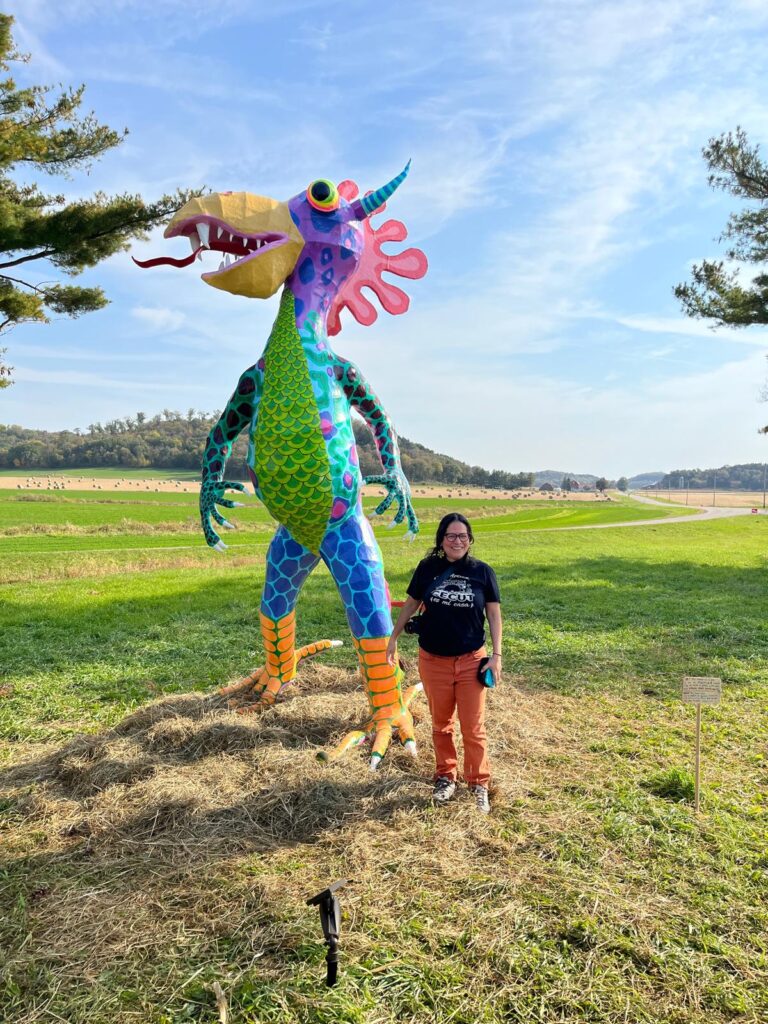
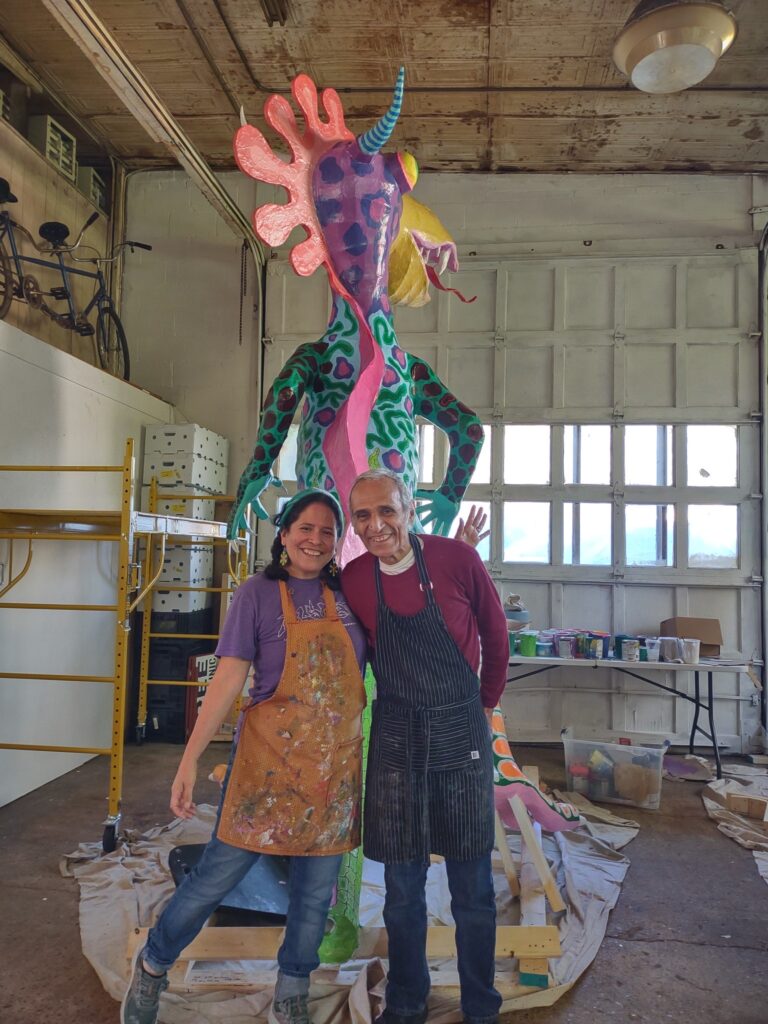
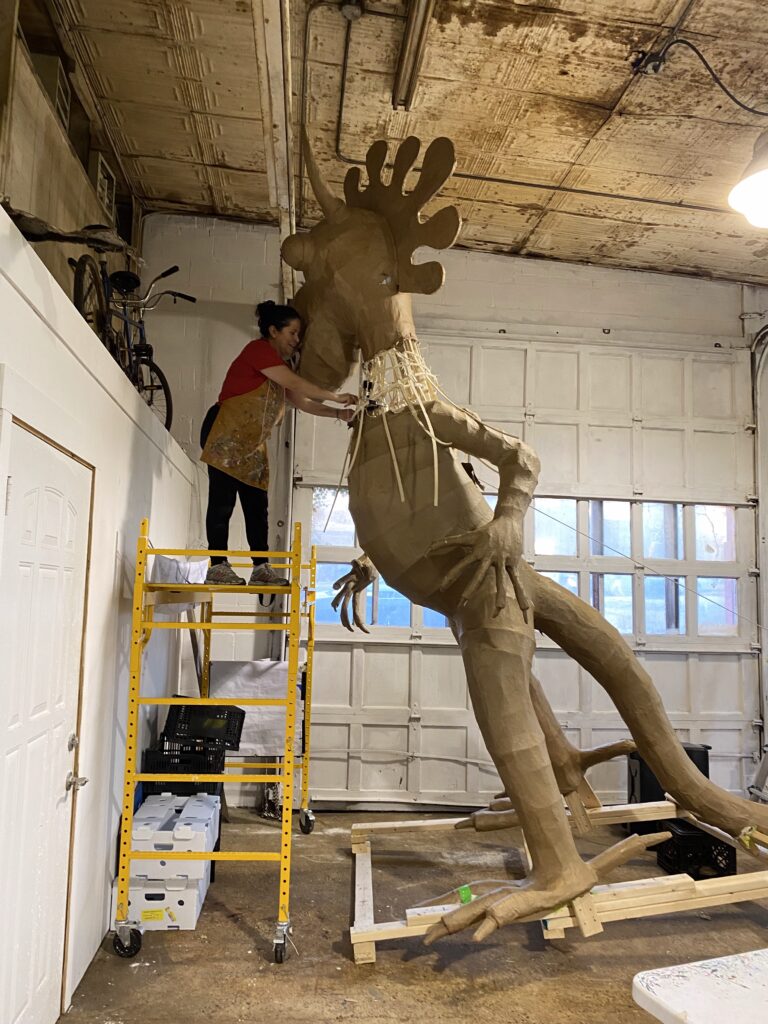
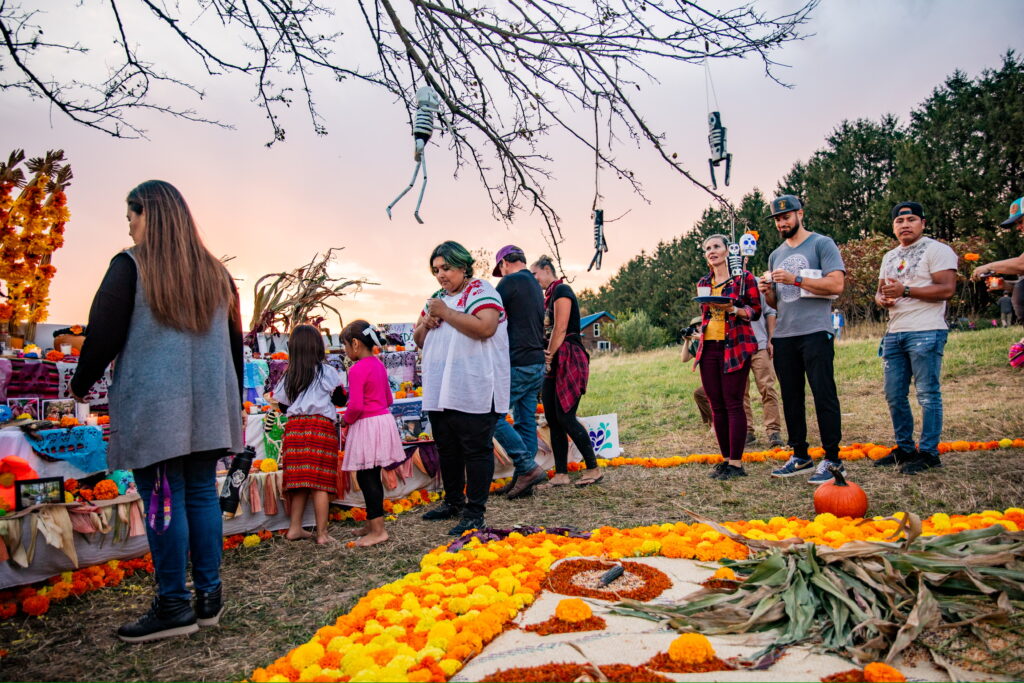
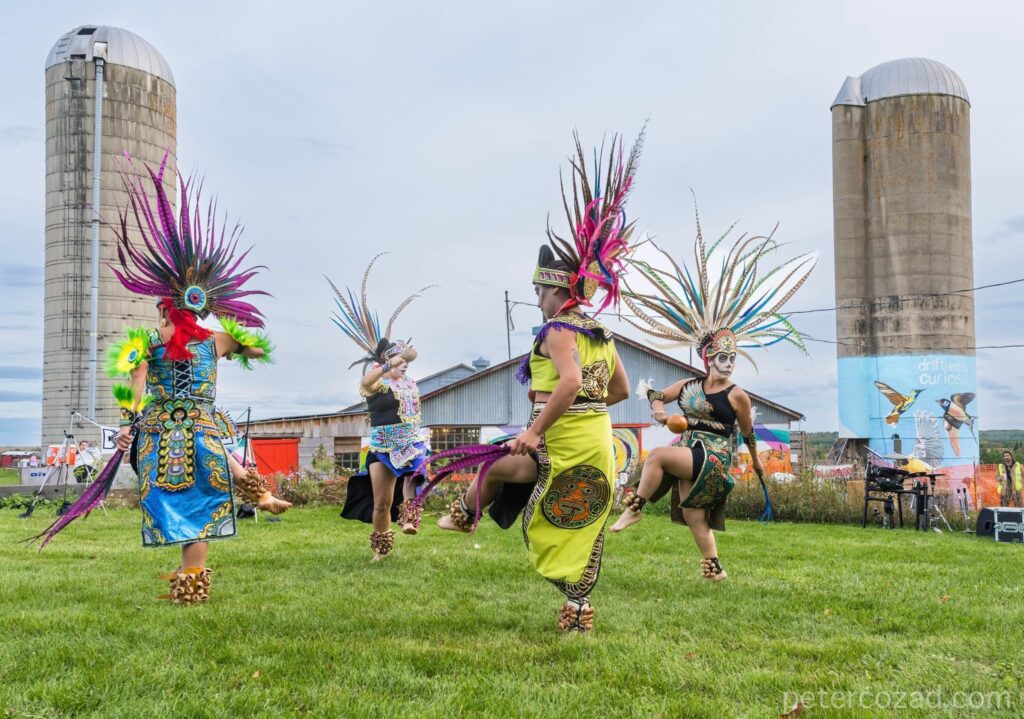
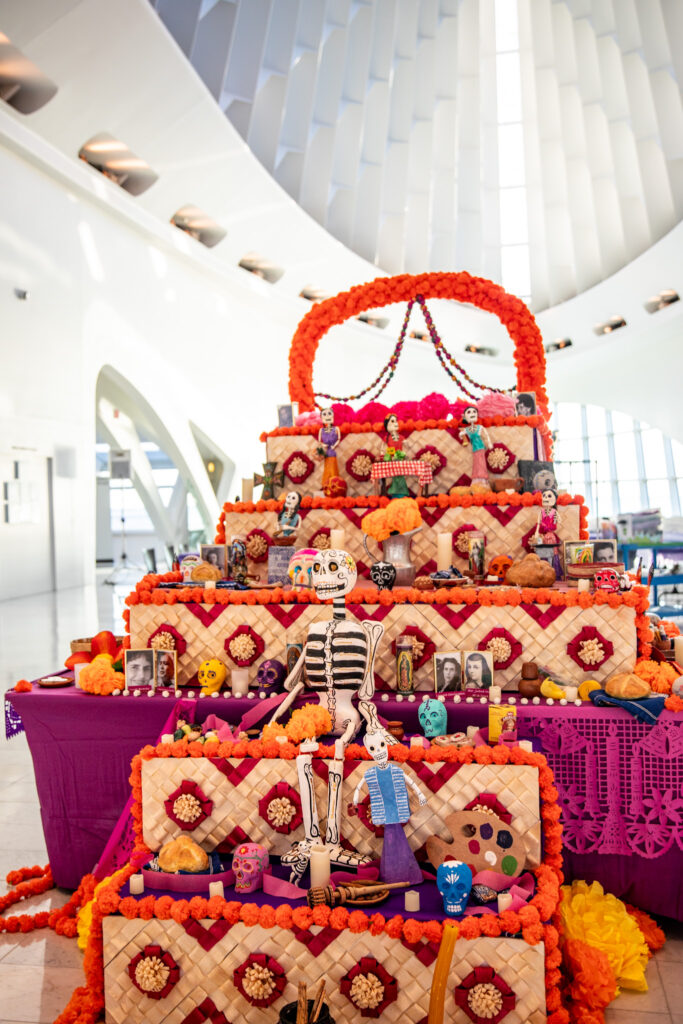
Marván founded the Mexican Folk Art Collective and launched the region’s first Día de Muertos celebration. Now an annual event, she organizes with local non-profit Driftless Curiosity and area farmers, who provide a venue, Mexican corn, and thousands of marigolds for people of all backgrounds to gather and build ofrendas or altars. Marván creates breathtaking cartonería displays.
“Community building means creating spaces where people feel invited to connect to something larger than ourselves,” she says. “Cartonería is the simple language I use to make that connection.”
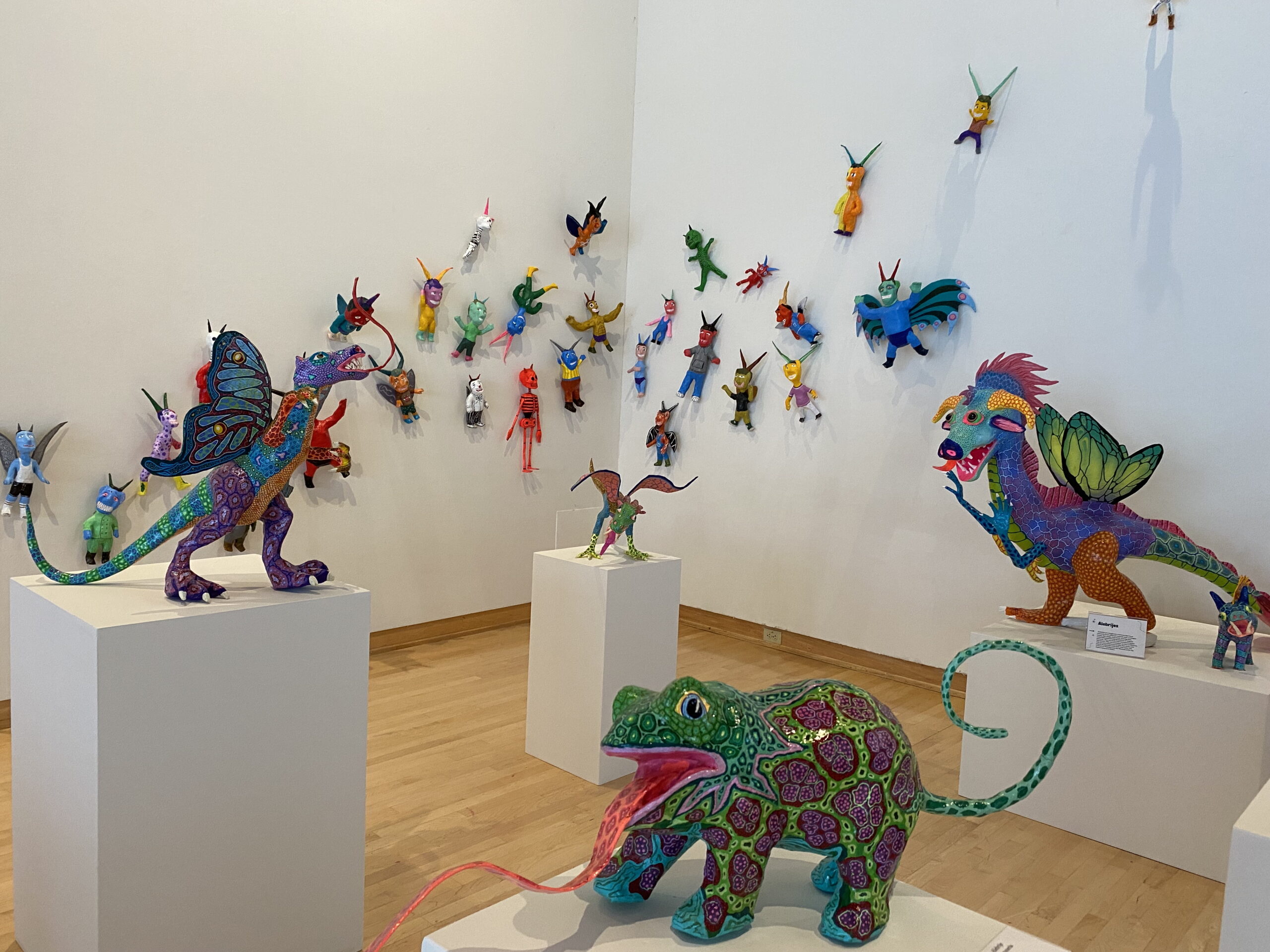
With the Mexican Folk Art Collective, Marván collaborates with other artists to host workshops at schools and libraries. She’s created large-scale alebrijes for venues like Sauk County’s Farm/Art DTour and Centro Hispano in Madison.
She has also curated exhibitions at galleries and museums, and presented workshops at the Mexican consulate in Milwaukee, the Milwaukee Art Museum, Latino Arts, and the Mexican Cultural Institute of Washington, D.C.
“Being a culture bearer is a responsibility of the heart,” she says. “To show up with humility, keep learning from traditional masters, and create spaces [to] pass traditions on. To allow them to grow and to adapt and belong to the people who experience them.”