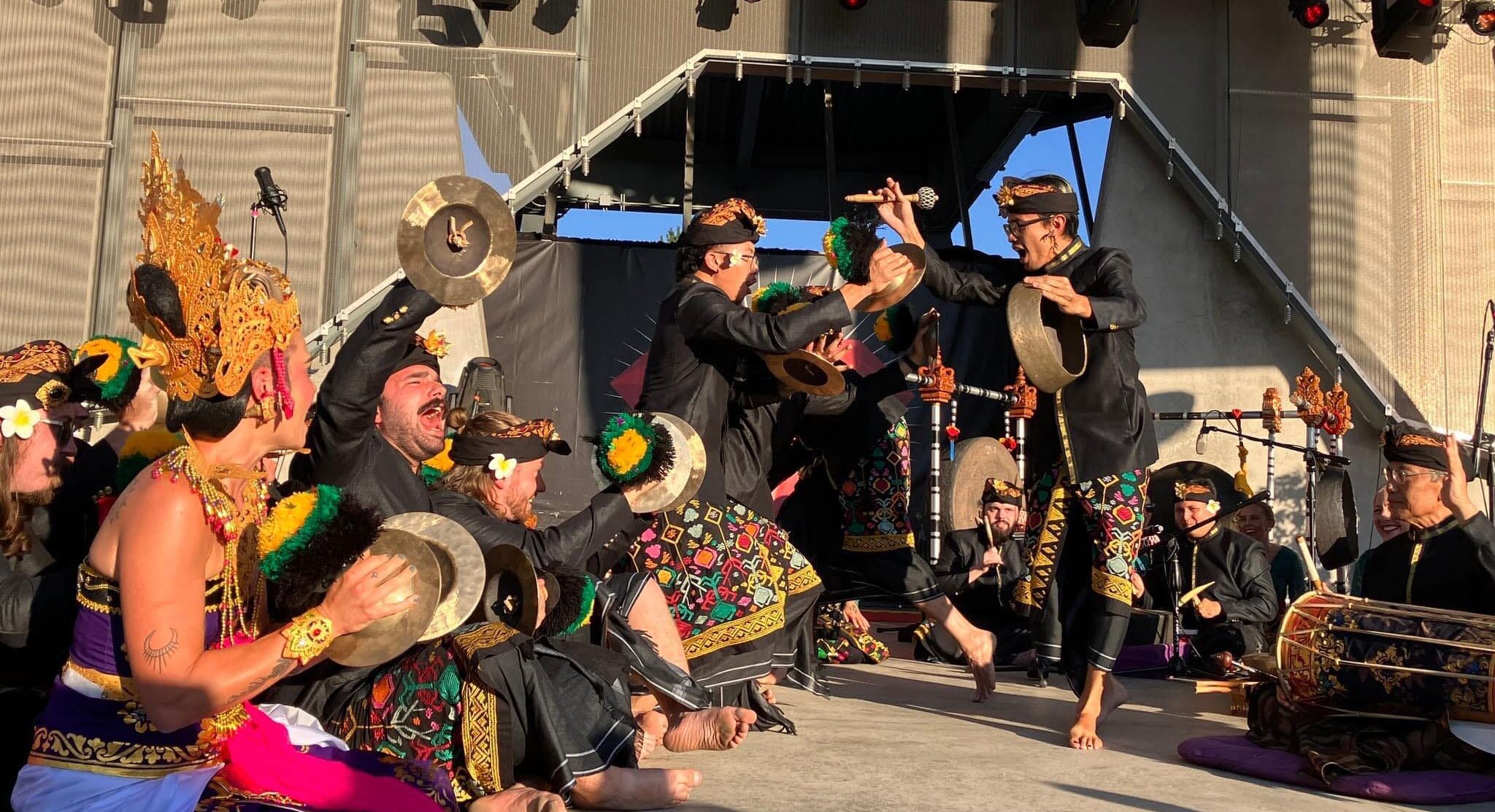
Award-winning sound artist, scholar, educator, and creative ethnographer Putu Tangkas Adi Hiranmayena summarizes his many hats with one whimsical title: Minister of Noise and Cosmology.
“It started as a little bit of a joke, because if there’s a conversation in which I don’t drop the word ‘noise’ or ‘cosmology,’ you know something’s wrong,” laughs Hiranmayena, who is a 2025 Midwest Culture Bearer awardee. “But it encapsulates the kind of things I’m interested in: how people believe and what people believe, and how the presence of noise exists in belief.”
While “noise” can be a broad term, Hiranmayena uses an Indonesian word to pinpoint his definition: ramé.

“[For many Indonesians] It’s a kind of noise that is desired…a centrality of human life,” he says. Think of a tailgate, a birthday party, or even a protest: “Loud and noisy, but full of love, life, and people in collective motion.”
Hiranmayena’s multi-layered career blends tradition and experimentation. He grew up performing Balinese music with his family, who emigrated to the U.S. when he was an infant. At the center of this tradition was gamelan, an ensemble of drums, gongs, flutes, and xylophones that is played by, for, and in community.
In Indonesia, gamelan are passed down from generation to generation. They are specific to each village, using locally sourced materials, designs, and tunings that are not usually standardized (attempts at standardizing is a huge critique of Hiranmayena). They feature in many ceremonies, often with multiple musical events happening simultaneously.
“Traditional Balinese music should not be conceptualized as mere entertainment (a contentious topic even amongst Indonesians); it’s an activity you do with people in your community,” says Hiranmayena. “When you have all these different musical practices in the same place, it becomes ramé.”
PUTU TANGKAS ADI HIRANMAYENA“Heavy metal tends to be really about the layperson, about getting with your buddies and negotiating creativity on your own without an authority . . . It took me a really long time to realize this, but gamelan traditionally works that way too.”
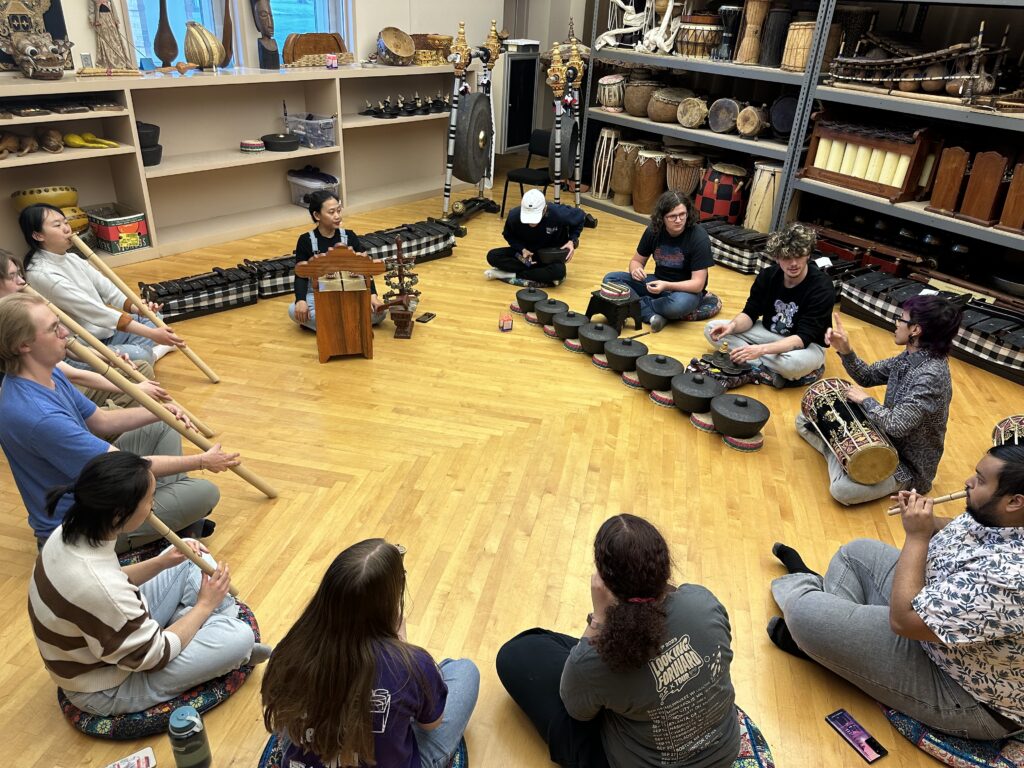
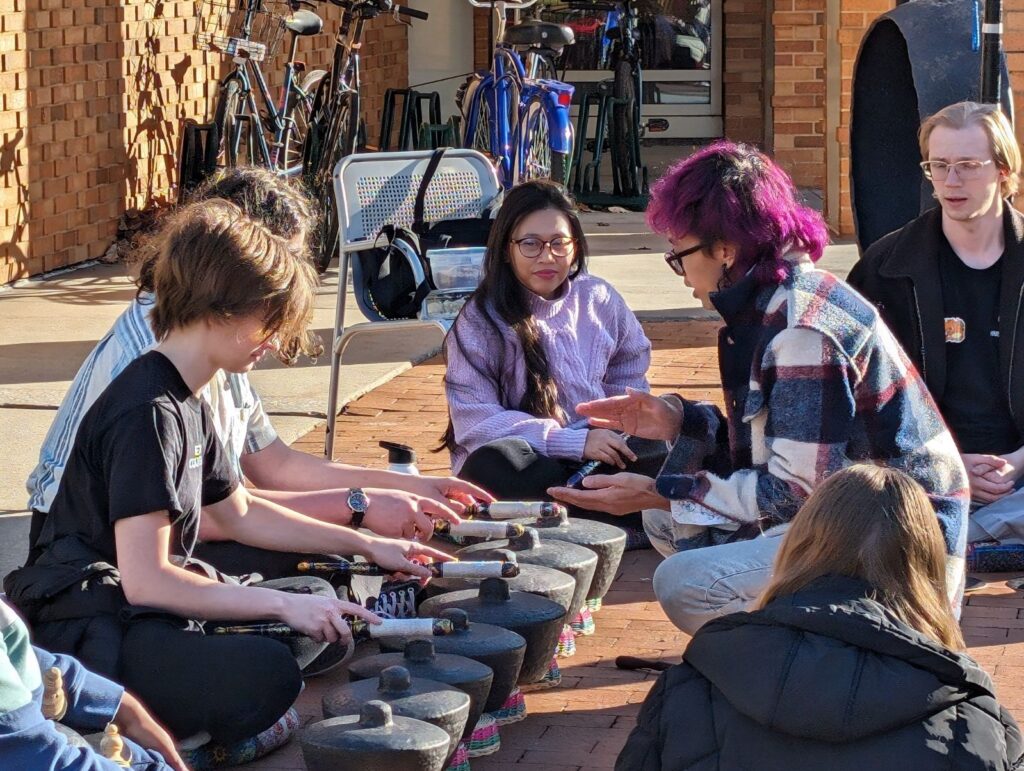
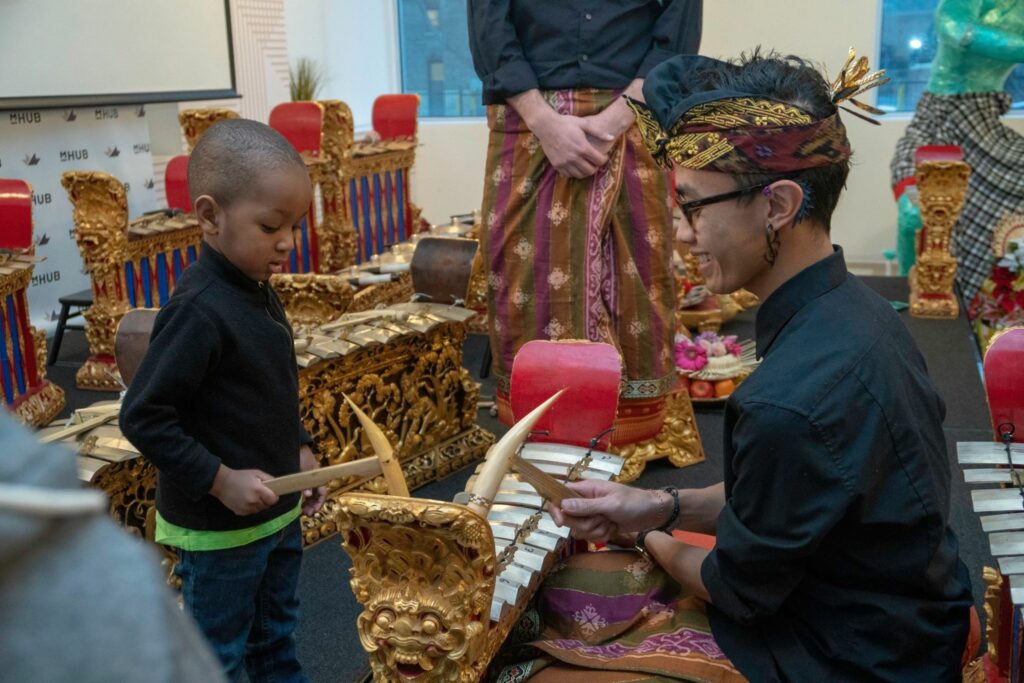
Today, Hiranmayena composes and collaborates regularly with gamelan ensembles across the country. He also performs in the noise/metal improvisational trio Turtles All the Way Down, the Balinese experimental duo ghOstMiSt with dancer/poet/anthropologist Dewa Ayu Eka Putri, and most recently under his solo moniker, aQarawaQ. His compositions use noise as a conduit to critique systems and point to cultural problems, from challenging patriarchy to addressing Bali’s waste crisis.
As a professor at Grinnell College in Iowa, he draws on his traditional music background to teach classes like instrument-making, in which students use local materials to create new instruments with an emphasis on sustainability and community building. He also draws on this background for another class: heavy metal.
“Heavy metal tends to be really about the layperson, about getting with your buddies and negotiating creativity on your own without an authority,” he says. “It took me a really long time to realize this, but gamelan traditionally works that way too.”
Community. Connection. Freedom from standardization. The tenets of both metal and traditional music, he says, revolve around these. And thus noisemaking advances justice.
Hiranmayena’s next project is the ParasWani Kvlektif, bringing together a collective of multi-modal Indonesian artists to create exactly what—and how—they want. The goal? To get noisy, he says, “making sure that the voices that exist today have no holds barred on what they want to get out.”
This is the heart of what a culture bearer is, he says. “It’s not forgetting where our communities come from, but also not being afraid to change and push for social justice, even within our own culture.”